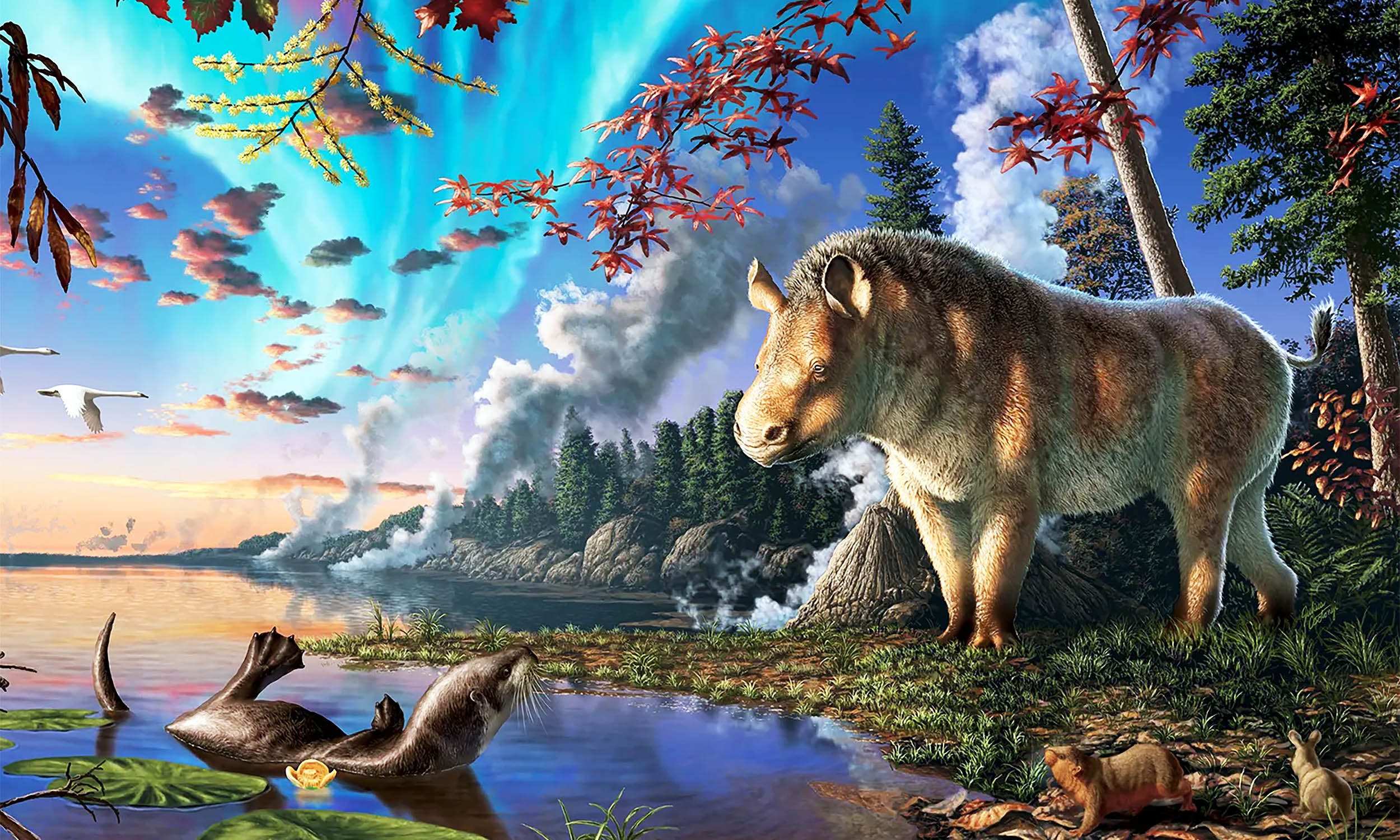
Deep within the frozen ground of Devon Island in Canada’s High Arctic, researchers have made a remarkable discovery: the nearly complete skeleton of a rhinoceros known as Epiaceratherium itjilik. This ancient creature roamed the Earth approximately 23 million years ago, during the late Miocene epoch. The find is significant not only because of the rarity of such well-preserved fossils in polar regions but also because it offers a unique glimpse into the climatic and ecological conditions that once prevailed in an area now characterized by its frigid temperatures and barren landscapes. The discovery challenges long-held perceptions of the Arctic environment during the Miocene, suggesting that it was once home to a diverse range of flora and fauna, including large mammals.
The excavation of the Epiaceratherium itjilik skeleton was a collaborative effort involving paleontologists from various institutions who braved the harsh Arctic conditions to study the fossil. This species, which belongs to a group of ancient rhinoceroses, is believed to have adapted to a much milder climate compared to the present-day Arctic. The skeletal remains reveal insights into the animal's size, morphology, and potential behavior. The Epiaceratherium is thought to have been a browser, feeding on the vegetation that flourished in the warmer climate of the Miocene. Its presence in the Arctic indicates that large herbivores once thrived in environments that are currently inhospitable, suggesting that the region has undergone significant climatic changes over millions of years.
The implications of this discovery extend beyond just understanding the life of Epiaceratherium itjilik. It raises important questions about the past ecosystems of the Arctic and how they responded to climatic shifts. The fossil record can serve as a crucial indicator of how species adapted to changing environments, providing valuable data for scientists studying current climate change. As temperatures rise and habitats alter due to human impact, examining how ancient species like Epiaceratherium migrated, adapted, or succumbed to environmental changes offers critical insights. Such research is pivotal in predicting the future resilience of modern species facing similar pressures.
Moreover, the discovery emphasizes the importance of paleontological research in polar regions. As climate change continues to impact the Arctic, the permafrost is beginning to thaw, revealing long-hidden fossils and offering a treasure trove of information about past life on Earth. The findings from Devon Island not only contribute to our understanding of prehistoric megafauna but also underscore the need for continued exploration and protection of these delicate ecosystems. The Epiaceratherium itjilik skeleton stands as a testament to the rich history of life in the Arctic and serves as a reminder of the dynamic nature of the planet’s climate and biodiversity over geological time scales.
23-million-year-old 'frosty rhino' discovered in the High Arctic - Earth.com