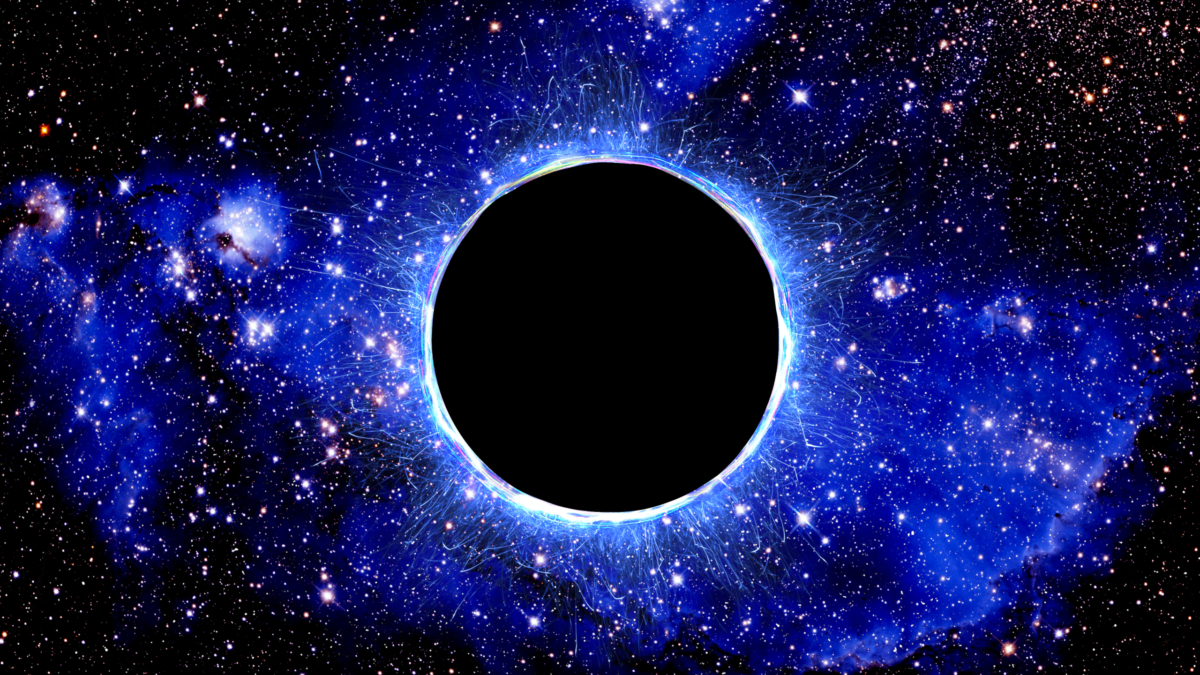
Black holes are among the most fascinating and enigmatic objects in the universe, captivating the minds of scientists and amateurs alike with their mysterious characteristics and behaviors. At their core, black holes are regions of spacetime where gravity is so strong that nothing, not even light, can escape from them. This immense gravitational pull results from the collapse of massive stars, which leads to a singularity—a point of infinite density—surrounded by an event horizon. The event horizon marks the boundary beyond which nothing can return, creating a one-way passage for matter and energy. As black holes consume nearby matter, they grow larger, and their gravitational influence expands, making them key players in the cosmic ecosystem.
One of the most striking phenomena associated with black holes is their ability to draw in surrounding matter, leading to the formation of an accretion disk. This disk is composed of gas, dust, and other debris that spiral into the black hole at incredible speeds. As this material accelerates, it heats up due to friction and gravitational forces, emitting X-rays and other forms of radiation that can be detected by telescopes. This process not only allows astronomers to study black holes indirectly but also highlights their role in the dynamics of galaxies. In fact, many supermassive black holes, which reside at the centers of galaxies, can influence star formation and the overall structure of their host galaxies through their gravitational pull.
In addition to their voracious appetite for matter, black holes are also known for their extraordinary jets. These jets are streams of charged particles that are ejected from the regions surrounding black holes at nearly the speed of light. They are thought to arise from the complex interactions of magnetic fields and the intense energy produced in the accretion disk. These jets can extend far beyond the host galaxy, impacting the intergalactic medium and playing a crucial role in regulating the growth of galaxies. The study of these jets not only provides insights into the behavior of black holes but also contributes to our understanding of the evolution of the universe itself.
Despite their captivating nature, black holes are often misunderstood. Common misconceptions include the belief that they are cosmic vacuum cleaners that indiscriminately suck up everything in their vicinity. In reality, black holes only exert a strong gravitational pull on objects that venture too close. If our sun were to be replaced by a black hole of the same mass, Earth would continue to orbit it in the same way, albeit without sunlight. Understanding these intricacies is essential for unraveling the true nature of black holes and their role in the cosmos. As research advances and technology improves, we continue to peel back the layers surrounding these cosmic giants, revealing their influence on the fabric of spacetime and the evolution of the universe.
A Physicist Built a Black Hole on a Chip. Then It Started to Leak. - ScienceAlert