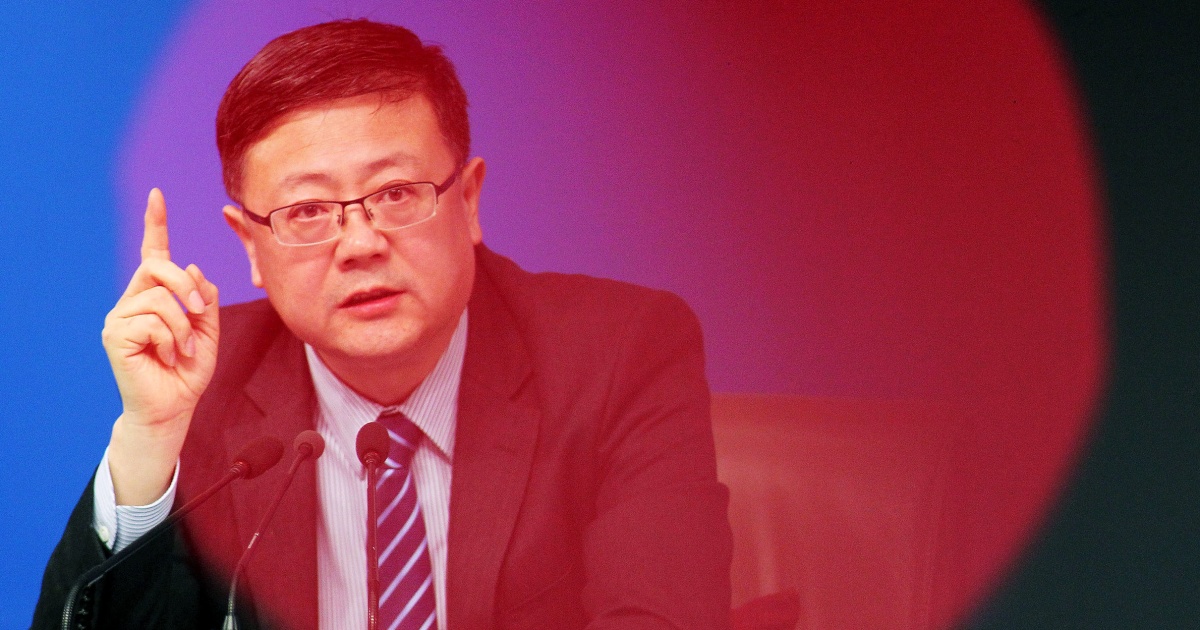
He was on the rise among China’s political elite, rapidly gaining prominence as the Shanghai party chief. Chen Jining's ascent was marked by his ability to navigate the complex landscape of Chinese politics, effectively hosting influential tech leaders and senior American officials alike. His role in Shanghai, one of the most economically vital cities in China, positioned him as a key player in the nation’s ambitions to integrate technology with governance. As the city became a hub for innovation and digital transformation, Chen’s leadership was seen as pivotal in fostering relationships between the Chinese government and the global tech community. His efforts were aimed not only at attracting foreign investment but also at showcasing Shanghai as a model for economic modernization and technological advancement.
However, the political landscape in China is notoriously volatile, and those who rise swiftly can just as easily fall from grace. Recent developments suggest that Chen Jining, despite his previous successes, might be facing significant challenges that could jeopardize his standing within the Communist Party. This shift in fortune is indicative of the broader tensions within the party, where internal power struggles and shifting allegiances can dramatically alter individual trajectories. Observers have noted that the increased scrutiny on party members, particularly those in influential positions, has intensified as President Xi Jinping consolidates power and seeks to reinforce loyalty among the ranks of the elite. Such dynamics may have placed Chen in a precarious position, raising questions about his future within the party hierarchy.
Moreover, Chen's previous engagements with American officials positioned him at the intersection of international diplomacy and domestic politics, a balancing act that can be fraught with risk. While fostering ties with the West is crucial for China's economic interests, it also invites criticism from hardliners within the party who may view such interactions as compromising national sovereignty. This ideological divide complicates Chen’s ability to navigate his role effectively, as he must contend with both the expectations of the party and the realities of a globalized economy. Consequently, his capacity to maintain his influence may now depend on his ability to align more closely with the prevailing sentiments within the party, which could involve a reevaluation of his previous diplomatic approaches.
The future of Chen Jining and his political career will likely hinge on how well he adapts to the shifting currents of Chinese politics. As the Communist Party continues to adapt its strategies in response to both domestic challenges and international pressures, leaders like Chen must remain agile and responsive to the evolving landscape. His fate may serve as a litmus test for other rising stars within the party, highlighting the risks associated with rapid advancement in a system characterized by intense competition and scrutiny. As the political climate continues to evolve, it will be crucial to watch how Chen navigates these challenges, as his responses may offer insights into the broader shifts occurring within China's political elite.
A rising star in China is the latest victim of Xi’s purge - NBC News