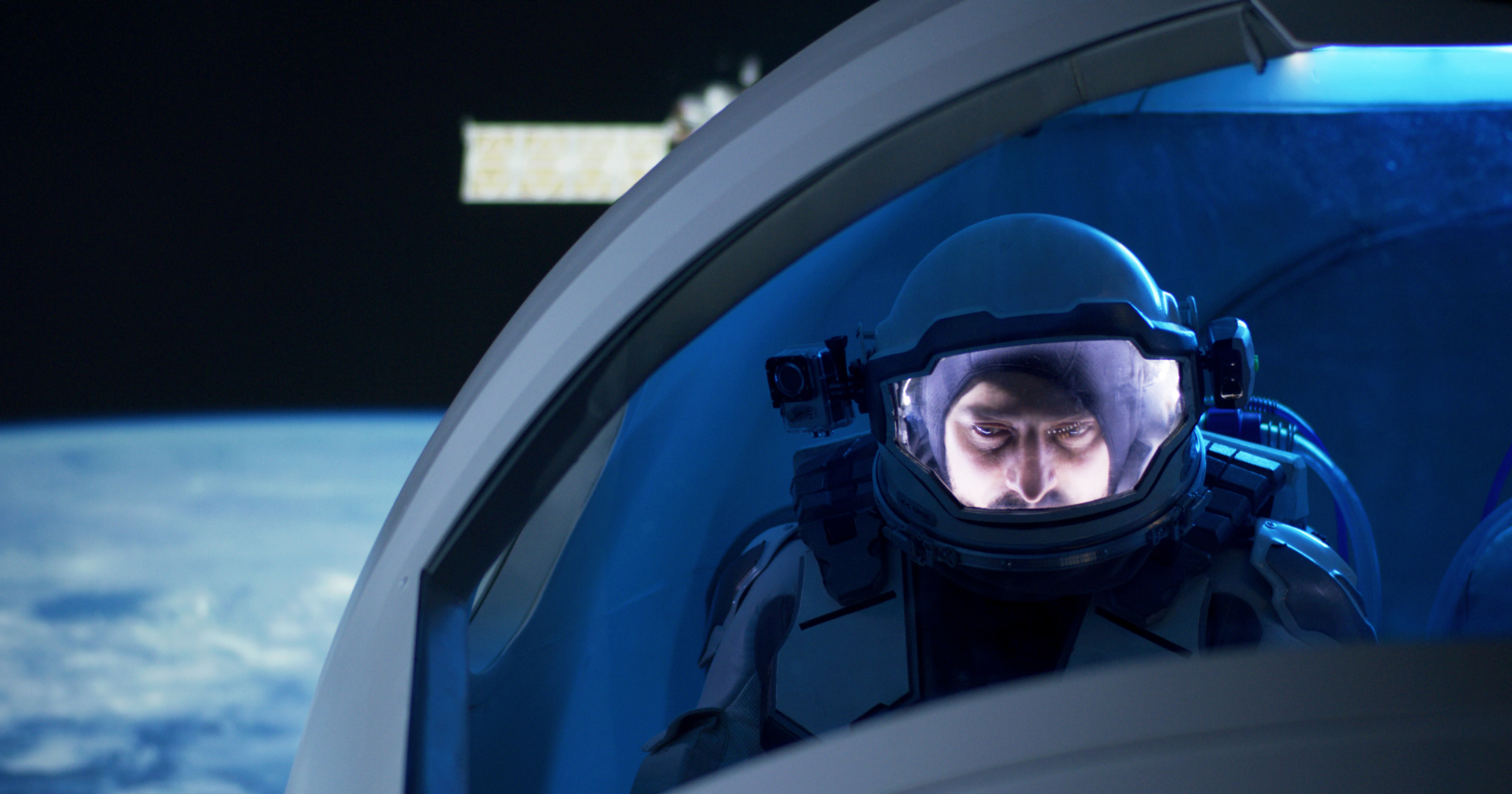
Apollo astronauts trying to rest on the way to the Moon kept noticing the same thing in the dark. With the cabin lights dimmed and their eyes adjusted to the low light, they began to see brief flashes and streaks of light, dots flickering in their peripheral vision. These phenomena were not just figments of their imagination or a result of fatigue; they were a real occurrence that puzzled the astronauts and scientists alike. Known as cosmic rays, these high-energy particles originated from outside the solar system, and the vacuum of space allowed them to travel unimpeded at nearly the speed of light. When these particles collided with the spacecraft or passed through the astronauts' retinas, they created the visual disturbances that the crew members observed during their rest periods.
The phenomenon, while intriguing, posed a unique challenge for the astronauts as they attempted to adapt to the conditions of space travel. The flashes and streaks of light could be distracting, making it difficult for them to relax and rest adequately before their critical lunar landing. The lack of gravity and the confined space of the command module also contributed to their discomfort, leading to a sense of disorientation that was further exacerbated by the cosmic rays. Astronauts like Buzz Aldrin and Neil Armstrong shared their experiences of trying to sleep amidst the mesmerizing yet disruptive lights, highlighting the mental and physical toll of prolonged spaceflight. This aspect of their journey underscores the complexities of human adaptation to space environments, where even the slightest disturbance can impact performance and well-being.
Scientists studying these cosmic ray interactions later sought to understand their implications not just for astronauts but for future space missions as well. The presence of these particles raises questions about the long-term health effects on humans exposed to such radiation, especially during extended missions to Mars or beyond. Research into cosmic rays has led to a better understanding of the radiation environment in space and the necessary precautions that need to be taken to protect astronauts. This includes advancements in spacecraft shielding and the development of monitoring systems to track radiation levels. The experiences of the Apollo astronauts thus contributed to a growing body of knowledge that informs ongoing conversations about space safety and human health in extraterrestrial environments.
In retrospect, the observations made by the Apollo astronauts serve as a reminder of the unpredictable nature of space travel. The flashes of light they encountered were not merely a nuisance but a manifestation of the broader cosmic phenomena that exist beyond Earth. As humanity pushes the boundaries of exploration, understanding the effects of cosmic rays and other space-related phenomena will be crucial for ensuring the safety and well-being of future astronauts. The legacy of the Apollo program, particularly the firsthand accounts of those who ventured to the Moon, continues to inspire and inform current and future generations of scientists, engineers, and explorers as they seek to unravel the mysteries of space and ensure that human life can thrive beyond our planet.
Apollo astronauts trying to sleep on the way to the Moon kept seeing flashes and streaks in the dark, and the cause turned out to be cosmic rays from deep space passing straight through their eyes. - Space Daily