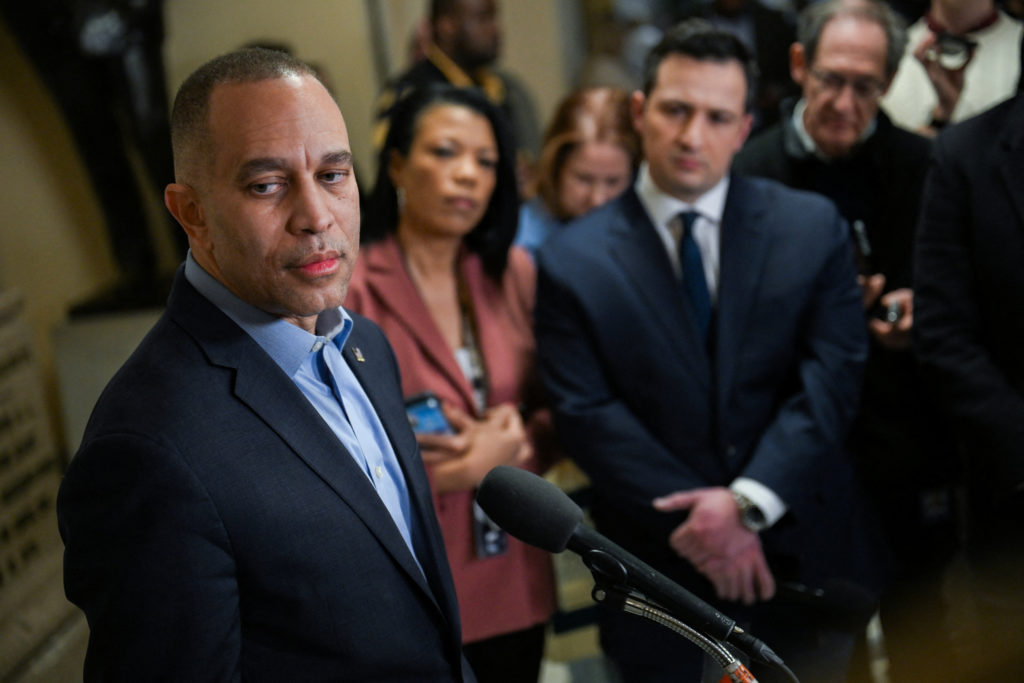
House Democratic Leader Hakeem Jeffries announced on Friday that a bipartisan coalition is mobilizing efforts to push for a vote on a war powers resolution, which is expected to take place as early as next week. This resolution aims to limit the scope of U.S. military actions abroad, particularly in regions where tensions are high and military engagements could escalate into larger conflicts. Jeffries, who has been vocal about the need for congressional oversight of military actions, emphasized the importance of ensuring that any significant military decisions receive thorough deliberation and approval from Congress, rather than being unilaterally decided by the executive branch.
The call for a war powers resolution comes at a time of heightened concern among lawmakers regarding the implications of U.S. military involvement in various global hotspots. In recent months, there has been an increased debate about the role of the U.S. in international conflicts, especially in the Middle East and Eastern Europe. The bipartisan coalition, which includes both Democrats and Republicans, reflects a growing sentiment among members of Congress that military interventions should not be undertaken lightly and should adhere to the principles laid out in the War Powers Act of 1973. This act was designed to check the president's power to commit the United States to armed conflict without the consent of Congress.
Jeffries highlighted that the resolution is not intended to hinder the ability of the U.S. to respond to immediate threats but rather to ensure that any military action is justified and subject to legislative scrutiny. By advocating for this resolution, the coalition seeks to foster a more collaborative approach to foreign policy that involves input from both major political parties. This effort underscores the importance of accountability and transparency in military engagements, especially in an era where rapid developments in global affairs can lead to swift decisions that might not always align with the interests of the American public.
As the coalition prepares to bring the resolution to a vote, it remains to be seen how much support it will garner from both sides of the aisle. The urgency of the situation has prompted many lawmakers to consider the broader implications of U.S. military involvement on national security, diplomatic relations, and the potential human cost of war. With the vote anticipated for next week, the conversation around the war powers resolution serves as a critical reminder of the delicate balance between national defense and democratic accountability, a balance that many lawmakers believe is essential for maintaining the integrity of U.S. foreign policy.
Congress prepares for war powers resolution vote to block U.S. strikes on Iran - PBS