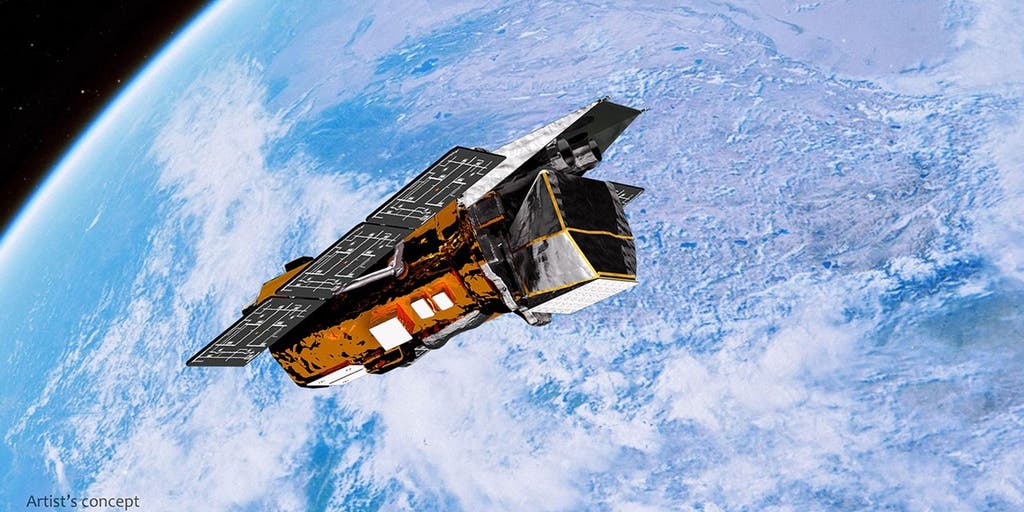
**The Takeaway: A Reflection on the Neil Gehrels Swift Observatory's Legacy**
The Neil Gehrels Swift Observatory, a cornerstone of astrophysical research, marked its final observation on October 20. This event not only signifies the conclusion of an era in space exploration but also highlights the remarkable achievements of this observatory throughout its operational life. Launched in 2004, Swift was designed to detect and analyze gamma-ray bursts (GRBs) and other celestial phenomena, making it a vital tool in understanding the universe's most explosive events. Over nearly two decades, the observatory has contributed significantly to our knowledge of black holes, neutron stars, and the formation of the universe itself, leaving a legacy that will continue to inspire future generations of astronomers and scientists.
Currently, the Swift Observatory is orbiting the Earth at an altitude of less than 171 miles, a position that has allowed it to maintain a unique vantage point for observing transient astronomical events. This low Earth orbit has been instrumental in the observatory's ability to quickly respond to GRBs, capturing critical data that has led to groundbreaking discoveries. Swift's innovative design features a combination of instruments, including a gamma-ray detector, an X-ray telescope, and an optical/ultraviolet telescope, enabling it to monitor a wide range of wavelengths. This multi-faceted approach has provided a holistic view of the phenomena it observes, making Swift a pioneer in the field of multi-messenger astronomy.
The scientific community has praised the Swift Observatory for its contributions to the understanding of cosmic phenomena, particularly in the realm of gamma-ray bursts. These bursts are among the most energetic events in the universe, often associated with the collapse of massive stars or the merger of neutron stars. Swift's ability to rapidly localize these bursts has led to numerous discoveries, including the identification of their host galaxies and the subsequent observation of the afterglows in different wavelengths. Such findings have not only enriched our comprehension of the lifecycle of stars but have also opened new avenues for research into the nature of dark energy and the expansion of the universe.
As the Neil Gehrels Swift Observatory concludes its mission, its impact on the field of astrophysics remains profound. Researchers continue to analyze the wealth of data collected over the years, ensuring that Swift's contributions will be felt long into the future. The observatory's legacy serves as a reminder of the importance of technological innovation and international collaboration in the pursuit of scientific knowledge. With the retirement of Swift, the astronomical community looks forward to the next generation of observatories that will build upon its achievements, exploring new frontiers in our understanding of the cosmos and unraveling the mysteries that lie beyond our planet.
End of an era as NASA telescope that detected thousands of gamma-ray bursts nears its final days - FOX Weather