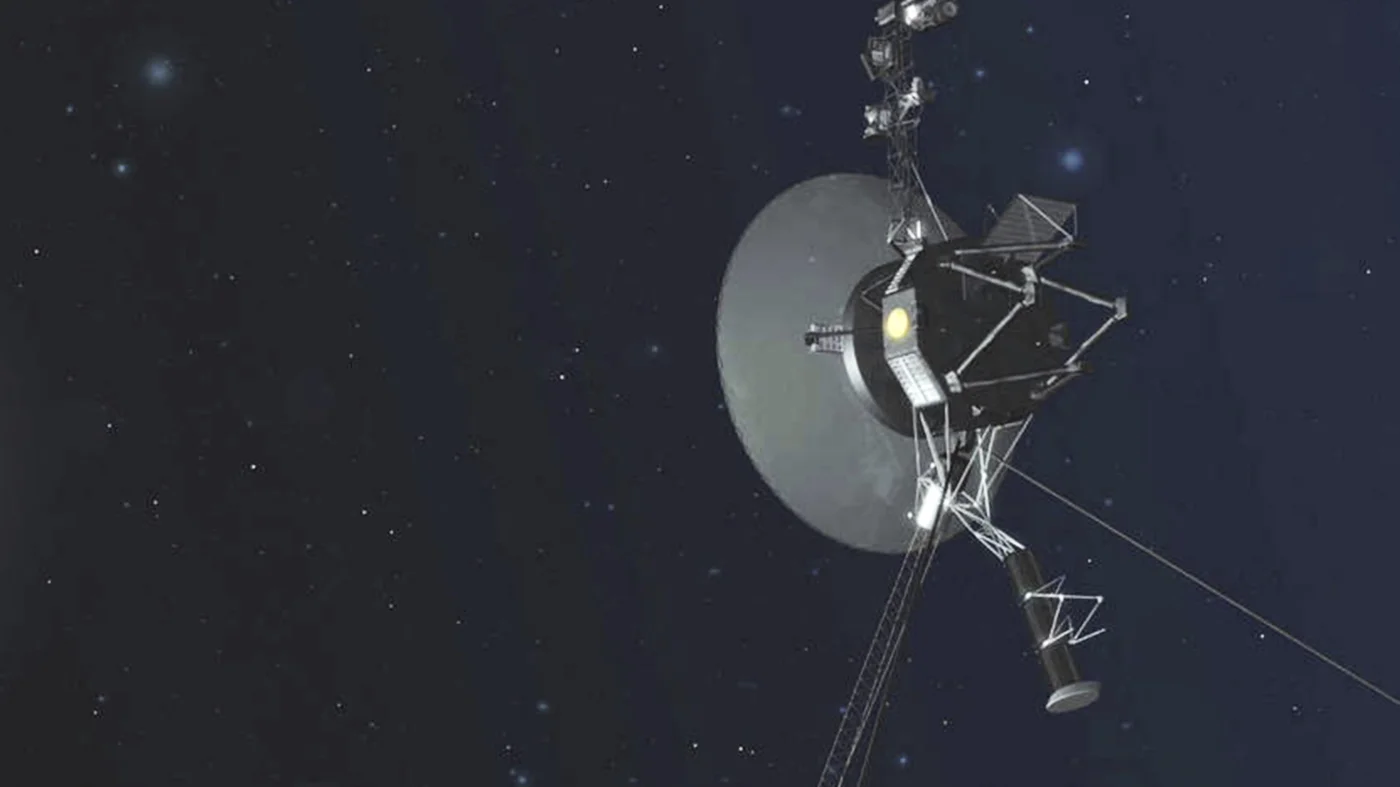
NASA's Voyager 1, a testament to human ingenuity and exploration, has ventured farther from Earth than any other spacecraft in history. Launched on September 5, 1977, the spacecraft has embarked on a journey that has spanned over four decades, gathering invaluable data about our solar system and beyond. As it continues its odyssey through the cosmos, Voyager 1 is about to reach a remarkable milestone: a distance of one light-day away from Earth. This distance, equivalent to approximately 93 million miles, underscores the extraordinary achievement of human engineering and the quest for knowledge about the universe.
The significance of this milestone is not just in the distance traveled, but also in the wealth of information that Voyager 1 has provided throughout its journey. The spacecraft has sent back groundbreaking data about the outer planets, including Jupiter and Saturn, and their respective moons. It has unveiled the intricacies of their atmospheres, magnetic fields, and even discovered new moons. Additionally, Voyager 1's Golden Record, a phonograph record containing sounds and images intended to portray the diversity of life and culture on Earth, serves as a time capsule for humanity, aimed at any potential extraterrestrial intelligence that may encounter the spacecraft in the far future.
As Voyager 1 approaches this one-light day mark, it also continues to send signals back to Earth, albeit at a diminishing rate due to the vast distances involved. The signals take over 23 hours to reach us, a stark reminder of the immense scale of space. NASA engineers and scientists are still actively monitoring the spacecraft's systems and instruments, ensuring that Voyager 1 remains functional as it traverses the interstellar medium. This ongoing communication highlights not only the technical prowess of the mission but also the enduring human curiosity that drives our exploration of the universe.
Looking ahead, Voyager 1 will soon enter uncharted territory, far beyond the influence of our solar system. As it journeys through the interstellar space, the data it continues to provide will help scientists better understand the interstellar environment and the cosmic phenomena that exist beyond our solar neighborhood. The mission of Voyager 1 exemplifies the spirit of exploration that defines humanity's relationship with the cosmos, reminding us of our place in the universe and inspiring future generations to reach for the stars. With each passing milestone, Voyager 1 not only marks the physical distance traveled but also signifies the endless pursuit of knowledge that characterizes human endeavor.
Far from home. Voyager 1 is now farther than anything man has sent into space - NPR