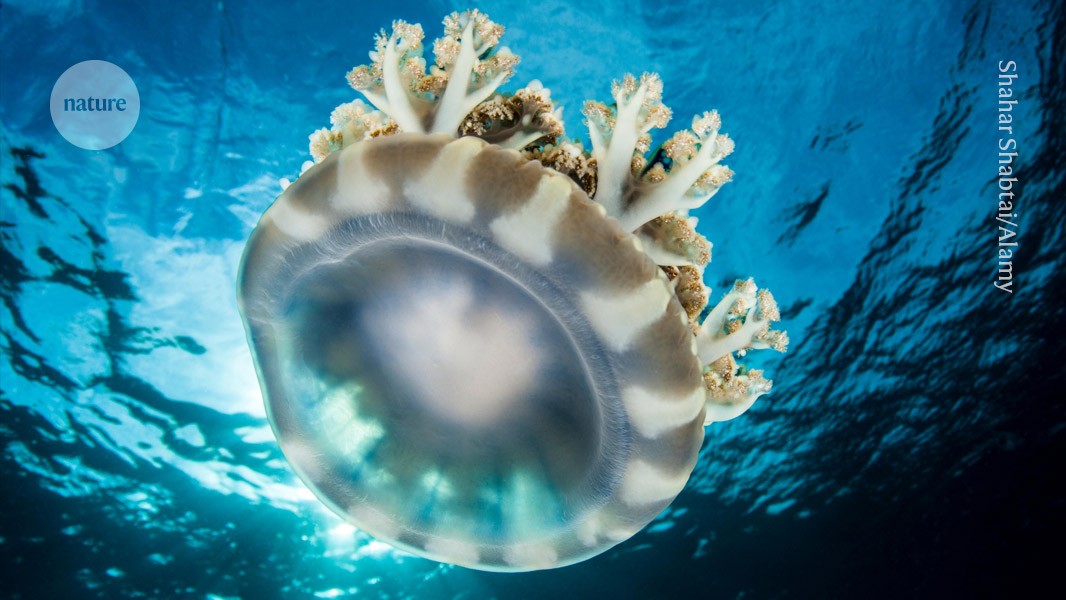
The upside-down jellyfish, scientifically known as Cassiopea andromeda, is a fascinating marine organism that exhibits unique behaviors, including a distinct sleeping pattern. Research indicates that these jellyfish enjoy a restful state for approximately eight hours each day, a duration that is similar to the sleep cycles observed in many more complex animals. This behavior raises intriguing questions about the nature of sleep in creatures that lack a centralized brain, highlighting the evolutionary adaptations that allow such organisms to engage in restorative processes. The way these jellyfish position themselves upside down while resting, with their bell facing the sea floor, further contributes to their distinct identity within the marine ecosystem.
Interestingly, both jellyfish and sea anemones belong to the phylum Cnidaria and share a number of characteristics, including the absence of a centralized brain. Instead, these animals possess a decentralized nerve net that allows them to respond to environmental stimuli and engage in basic motor functions. The ability to sleep, or enter a state of reduced activity, suggests that even simple organisms have developed mechanisms to cope with the demands of their environment. For Cassiopea andromeda, sleep is not merely a passive state; it plays a critical role in their overall health and well-being, allowing them to conserve energy and recover from the stresses of their active periods.
The implications of sleep in non-brain organisms challenge traditional notions of consciousness and awareness. In the case of the upside-down jellyfish, their sleep behavior provides insights into the evolutionary significance of rest and recovery in marine life. Studies have shown that during their resting phase, these jellyfish exhibit reduced swimming activity and a lowered response to external stimuli, indicating a shift in their metabolic processes. This phenomenon points to the potential necessity of sleep-like states across diverse species, even among those that lack complex nervous systems, suggesting that the need for rest is a fundamental biological requirement shared across the animal kingdom.
As researchers continue to explore the mysteries of sleep in marine organisms like Cassiopea andromeda, they are uncovering a wealth of information about the evolutionary origins of this essential behavior. The study of sleep in jellyfish not only enhances our understanding of these intriguing creatures but also prompts further inquiry into the broader implications of sleep across various life forms. By examining how such simple organisms manage their rest and recovery, scientists can glean valuable insights into the evolutionary pressures that have shaped the sleep patterns of more complex animals, including humans. Ultimately, the upside-down jellyfish serves as a reminder that sleep, in its many forms, is a vital component of life across the diverse tapestry of the natural world.
Jellyfish sleep like humans — even though they don’t have brains - Nature