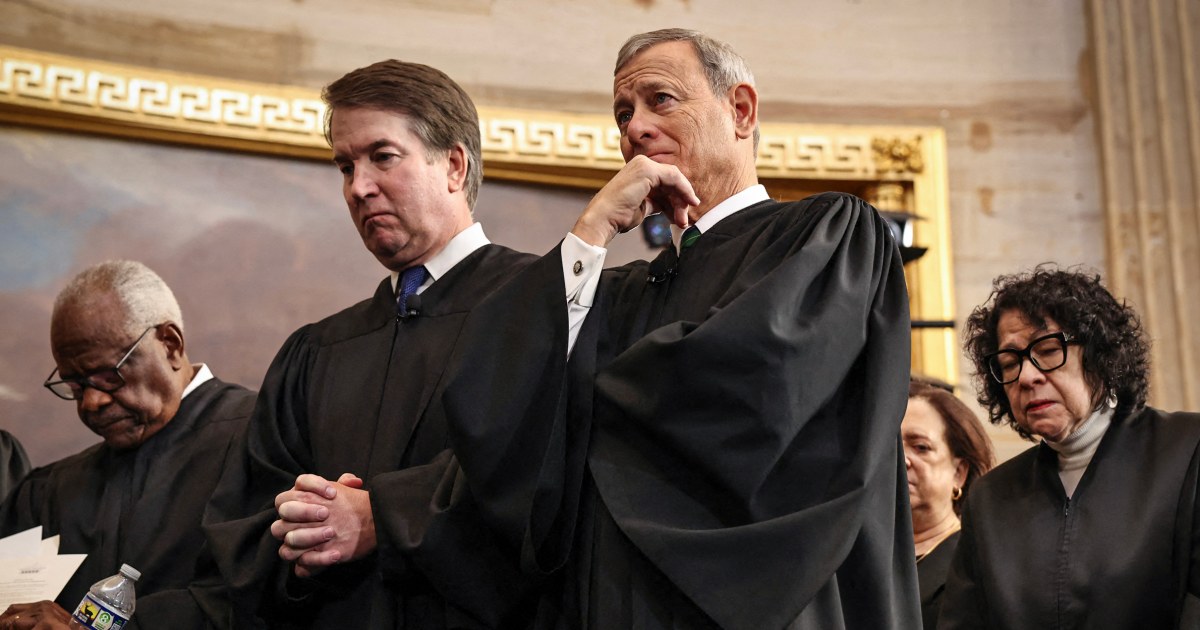
On Wednesday, Justice Sonia Sotomayor, a prominent member of the Supreme Court, found herself in the spotlight for issuing an unexpected apology regarding comments she made about Justice Brett Kavanaugh's upbringing. The remarks, which were perceived as critical of Kavanaugh's background and his judicial philosophy, stirred considerable debate not only among legal scholars but also among the general public. Sotomayor’s apology was striking given the traditionally reserved nature of Supreme Court justices when it comes to public discourse about their colleagues. The incident highlighted the often tense dynamics within the court, particularly as ideological divides among justices have become more pronounced in recent years.
Sotomayor's original comments were made during a public event, where she reflected on the importance of diverse life experiences in shaping judicial perspectives. While her intention was to advocate for inclusivity and the acknowledgment of varied backgrounds in the judiciary, her remarks about Kavanaugh's privileged upbringing were interpreted as a personal critique. This led to a backlash from both conservative commentators and some members of the legal community, who accused her of undermining the collegiality that is expected within the highest court in the land. The fallout prompted Sotomayor to reconsider her words and ultimately issue an apology, expressing regret for any offense taken and emphasizing her respect for Kavanaugh as a colleague.
The significance of Sotomayor's apology extends beyond the immediate context of her remarks. It raises questions about the current state of the Supreme Court, where justices often grapple with not only legal issues but also the personal beliefs and experiences that inform their decisions. As the court faces increasingly polarized cases, the relationships among justices can impact both the court's functionality and public perception. Sotomayor's willingness to publicly acknowledge her misstep may signal a desire to restore a sense of decorum and mutual respect within the court, even amidst stark ideological differences.
Moreover, this incident underscores the broader challenges faced by justices in navigating their roles as both legal arbiters and public figures. In an age where social media and public engagement are ever-present, the actions and words of Supreme Court justices are scrutinized more than ever. Sotomayor's apology serves as a reminder that personal reflections can easily be misconstrued or lead to unintended consequences, especially in a judicial context where professionalism is paramount. As the Supreme Court continues to address contentious issues that shape American society, the interactions among its members will likely remain a focal point for both legal analysts and the public.
Justice Sonia Sotomayor issues unusual apology over 'hurtful' remarks about colleague Brett Kavanaugh - NBC News