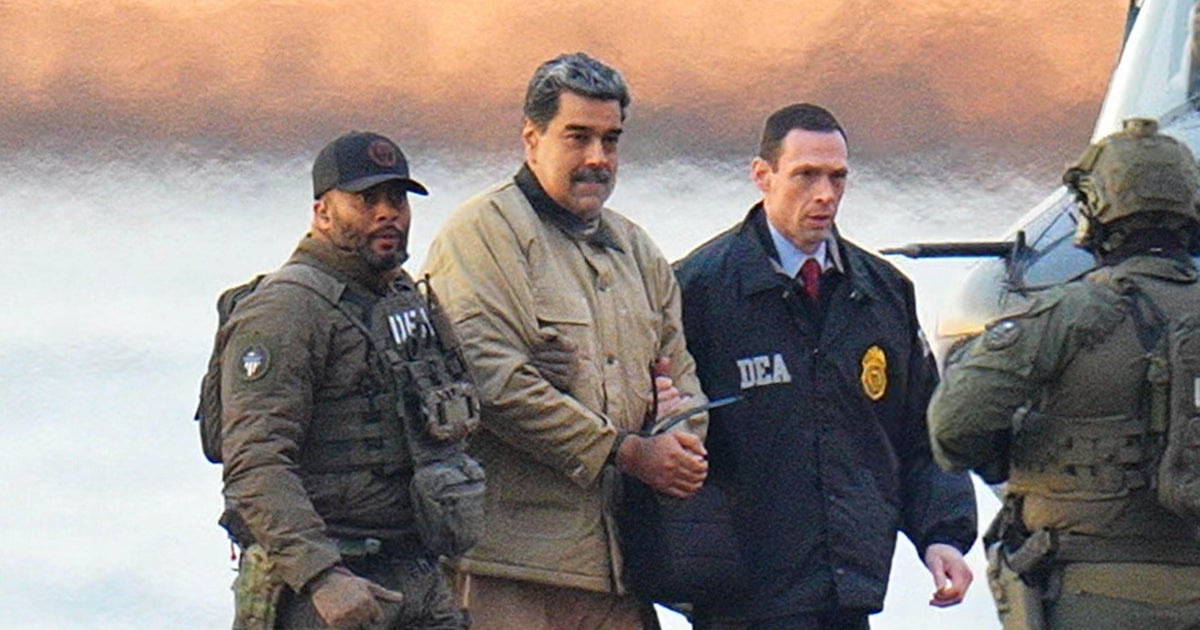
Nicolás Maduro, the former president of Venezuela, has become a central figure in the ongoing political turmoil that has engulfed the South American nation. His recent appearance in federal court in Manhattan marks a significant development in a saga that has captured international attention. After U.S. forces invaded Venezuela approximately three months ago, Maduro was brought to the United States to face various charges related to drug trafficking, corruption, and human rights violations. His arrival in the U.S. not only underscores the severe implications of his leadership but also highlights the lengths to which the U.S. government is willing to go to address what it considers a serious threat to regional stability and international law.
During the court proceedings, Maduro, alongside his wife, Cilia Flores, presented a facade of defiance, insisting on their innocence and portraying the charges against them as politically motivated. The couple's defense is likely to hinge on arguments that their prosecution is a manifestation of U.S. imperialism and interference in Venezuelan sovereignty. Maduro's legal team has indicated plans to challenge the evidence presented by U.S. authorities, which they claim is fabricated and part of a broader strategy to undermine the Bolivarian Revolution—a movement founded by Hugo Chávez, Maduro's predecessor, aimed at promoting socialism in Venezuela. This courtroom drama unfolds against a backdrop of escalating tensions between the U.S. and Venezuela, with implications that extend far beyond the courtroom.
The geopolitical ramifications of Maduro's trial are profound. With ongoing economic sanctions imposed by the U.S. and its allies, Venezuela's economy has been in freefall, leading to widespread poverty and mass emigration. The trial has the potential to further polarize an already divided Venezuelan society, with supporters rallying around Maduro's narrative of resistance against foreign intervention, while opponents see the court case as an opportunity for justice and accountability for years of alleged abuses. International reactions to the trial are also noteworthy; countries such as Russia and China have expressed their support for Maduro, framing the U.S. actions as unlawful and provocative. This international dimension complicates the case, as it raises questions about global governance and international law.
As the trial progresses, it remains to be seen how the proceedings will impact the political landscape in Venezuela and throughout the region. Analysts suggest that the outcome could either embolden Maduro's regime or pave the way for a potential transition of power, depending on how his supporters and detractors react to the unfolding events. Regardless of the verdict, the trial is likely to serve as a litmus test for U.S. foreign policy in Latin America, particularly regarding its approach to authoritarian regimes and the delicate balance of supporting democratic movements while respecting national sovereignty. The implications of this case will resonate for years to come, shaping not only Venezuela's future but also the broader dynamics of international relations in a rapidly changing world.
Nicolás Maduro held in a "jail inside of a jail" under special administrative measures, sources say - CBS News