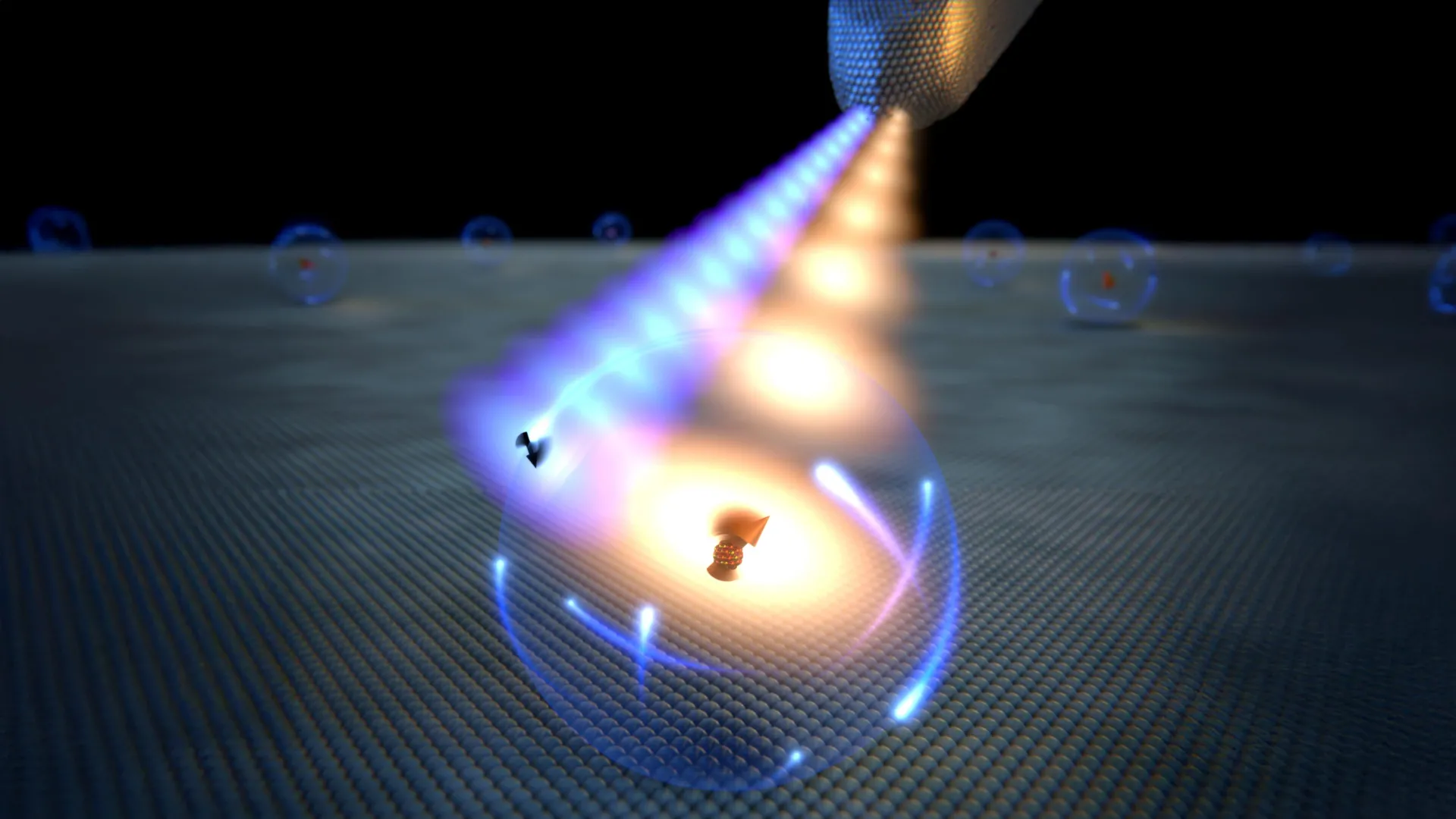
Researchers at Delft University of Technology in The Netherlands have achieved a groundbreaking feat that challenges long-standing beliefs within the field of physics. Traditionally, it was thought that certain processes involving quantum systems could not be manipulated using radio waves. However, the innovative team at Delft has successfully demonstrated that it is indeed possible to directly control quantum systems through the application of radio frequency signals. This discovery opens up exciting new avenues for research and applications in quantum computing, communication, and other advanced technologies that rely on the principles of quantum mechanics.
The team’s breakthrough revolves around the ability to manipulate quantum states in a manner that was previously deemed unfeasible. By harnessing the properties of radio waves, researchers were able to achieve a level of control over quantum systems that allows for the direct observation and adjustment of quantum states. This level of precision is crucial for the development of reliable quantum computers, where qubits—the basic units of quantum information—must be controlled with extreme accuracy to perform calculations faster than classical computers. The implications of this research extend beyond mere theoretical advancements; they could lead to the development of more efficient quantum devices that could revolutionize the fields of cryptography, material science, and complex system simulations.
In their experiments, the researchers utilized a combination of innovative techniques, including sophisticated signal processing and advanced materials, to manipulate the quantum states effectively. The research team worked with superconducting qubits, which are particularly well-suited for this kind of manipulation due to their ability to maintain coherence over relatively long timescales. By applying tailored radio frequency pulses, they successfully navigated the intricate landscape of quantum states, demonstrating the ability to control various parameters with unprecedented precision. This meticulous approach has not only validated their theoretical models but has also provided a practical framework for future experiments in quantum physics.
As the implications of this work become more apparent, it is likely to inspire further research into the use of radio waves in quantum technology. Researchers across the globe will undoubtedly be keen to explore the ramifications of this discovery and how it can be integrated into existing quantum systems. The potential for enhanced performance in quantum computing and communication systems could lead to significant advancements in technology, offering unprecedented speed and security. Ultimately, the work conducted at Delft University of Technology signifies a significant step forward in our understanding and application of quantum mechanics, paving the way for innovations that could redefine the landscape of modern science and technology.
Physicists defy expectations by controlling the magnetic heart of a single atom - Science Daily